

Written by Charlotte’s Mom, Jennifer.
One year ago, we were told there were no other treatment options for Charlotte.
Charlotte had just completed her second round of radiation, and we were told her tumour would likely progress faster than it had after her first round.
“Go keep making memories.”
We did not want to accept that we could not save our child.
The desperation you feel as a parent in that situation is something I can’t even begin to describe. You are searching everywhere for an option. You are reading clinical trial protocols and research papers late at night. You are asking questions you never imagined you would have to ask.
And you are trying to make impossible decisions about your child’s life.
We had actually been previously approved for a clinical trial in Seattle, and Charlotte travelled there and received treatment through that trial. We knew firsthand that clinical trials could provide hope and opportunities that simply weren’t available to us in Canada.
So when we were told there were no other treatment options, we began looking around the world again.
The one clinical trial in Canada for DIPG was one we had extensively researched. In our hearts, we could not put Charlotte through the gruelling chemotherapy involved when we were not seeing outcomes that gave us enough hope to justify what we would be asking her to endure.
When you are potentially facing your child’s last weeks, months or years, there is an impossible balance between doing everything you can to extend their life and making sure the time they have left is filled with the best days possible.
We looked around the world.
Many clinical trials simply did not accept international patients. Others would not accept Charlotte because she was no longer newly diagnosed. Some required a biopsy, which was extremely risky given the location of her tumour.
And then we learned that Charlotte couldn’t qualify for another trial because her tumour wasn’t progressing (growing) at that time.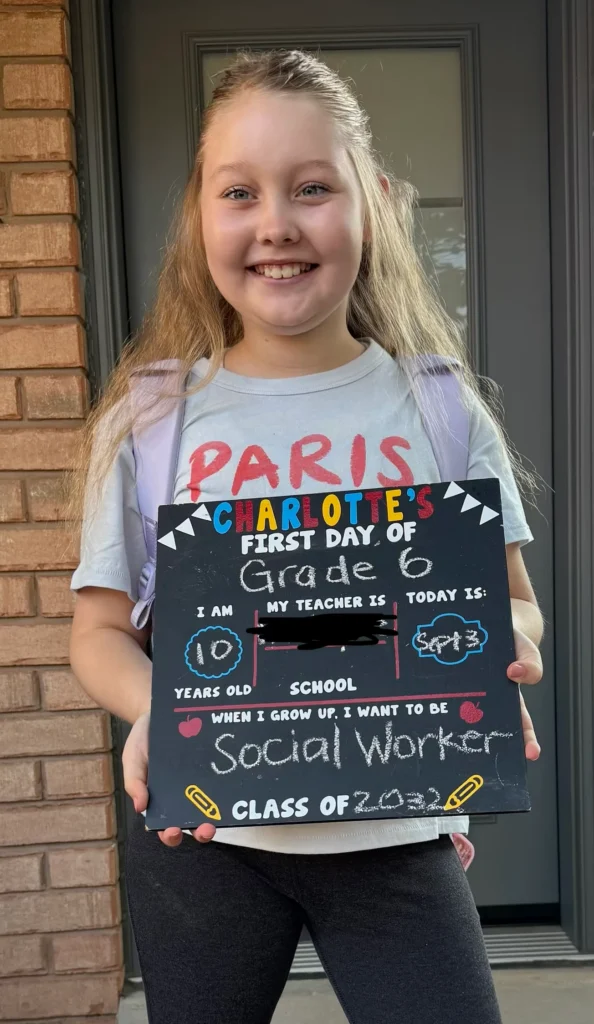
When her tumour finally started to progress in December, we were required to wait another month and have it confirmed on an MRI that it was, in fact, growing so that she could qualify for what we believed was our only remaining hope — a clinical trial in Columbus, Ohio.
By January, even getting Charlotte to the United States was incredibly complicated. We had concerns about whether she would be permitted entry given her medical condition, she would not qualify for health insurance, what would happen if she became hospitalized there, and whether we would even be able to safely bring her home.
We strongly advocated for Charlotte to receive radiation for a third time here in Canada, as well as compassionate, off-trial access to two drugs being studied in clinical trials outside of Canada. We are incredibly grateful that she received those treatments.
We know these treatments gave us more time with Charlotte.
And during that time, Charlotte’s Smiles 4 Kids Project was born. That will always be one of the greatest examples of who Charlotte was. Even when she was fighting for her own life, she was thinking about other children and how she could make their lives a little brighter.
But our Canadian children fighting cancer deserve better. Their families deserve better.
No parent should have to search the world for a clinical trial their child might qualify for.
No parent should have to wonder whether geography, diagnosis timing, eligibility criteria or access to funding will determine whether their child gets a chance.
Our family is committed to taking what we experienced with Charlotte and using it to advocate for equal access to treatment, increased pediatric cancer research and compassionate programs that support children and their families.
One statistic that has stayed with me is that only 7% of total cancer research funding in Canada is dedicated to pediatric cancer research. Let that sink in.
And no, research into adult cancers does not simply translate into treatments for pediatric cancers like DIPG. Children need research specifically focused on childhood cancers.
They need more funding, clinical trials and opportunities to participate in innovative treatments in their own country. And they need those opportunities before families are left with nowhere else to turn.
But please — don’t just hear about our family reaching out to our MP.
We are all feeling the loss of Charlotte. You have seen and heard how devastating childhood cancer is.
Write to your MP. You don’t need to be an expert. You know about Charlotte and our story.
Tell them that pediatric cancer research and access to clinical trials need to be a priority in Canada.
I have created a letter to get you started and you can just add your connection to childhood cancer. I am also very happy to share my (more in-depth) letter that I sent to my MP. Please contact me via Charlotte’s Smiles 4 Kids Project to learn more.
It’s Childhood Cancer Month in September so the opportunity is now for the call to action. Things need to change.
To find your MP, please visit – https://www.ourcommons.ca/Members/en
*Childhood Cancer Canada also has some templated emails for you to send to your MP.
As part of our Let’s Face the Unimaginable campaign, Jennifer shared the following as for what she wished people understood about the unimaginable realities of childhood cancer:
I wish people understood what it does to a parent’s mind to live in constant fear of losing their child. We are faced with searching for treatment options, making impossible decisions, watching them suffer, and somehow keep going. Childhood cancer changes you and the emotional impact is long-lasting.
I wish people understood that childhood cancer is a mental health crisis for the entire family, not just a medical diagnosis for one child. Children, parents and siblings can carry fear, anxiety and trauma for years. Mental health supports should be from the very beginning and an essential part of cancer care.
I wish people understood that when your child is diagnosed with cancer, you don’t just fight the disease. You are also fighting for answers, for access, for time, and for hope. Sometimes, despite everything you do, there simply aren’t enough options. That is why awareness isn’t enough and we need action.
I wish people understood that when a child has cancer, life keeps going. Parents may have to stop working or travel far from home to access care, while still carrying the mortgage, living expenses as well as additional expenses related to care. The financial impact can be enormous, and families shouldn’t have to carry that burden while fighting for their child’s life.
